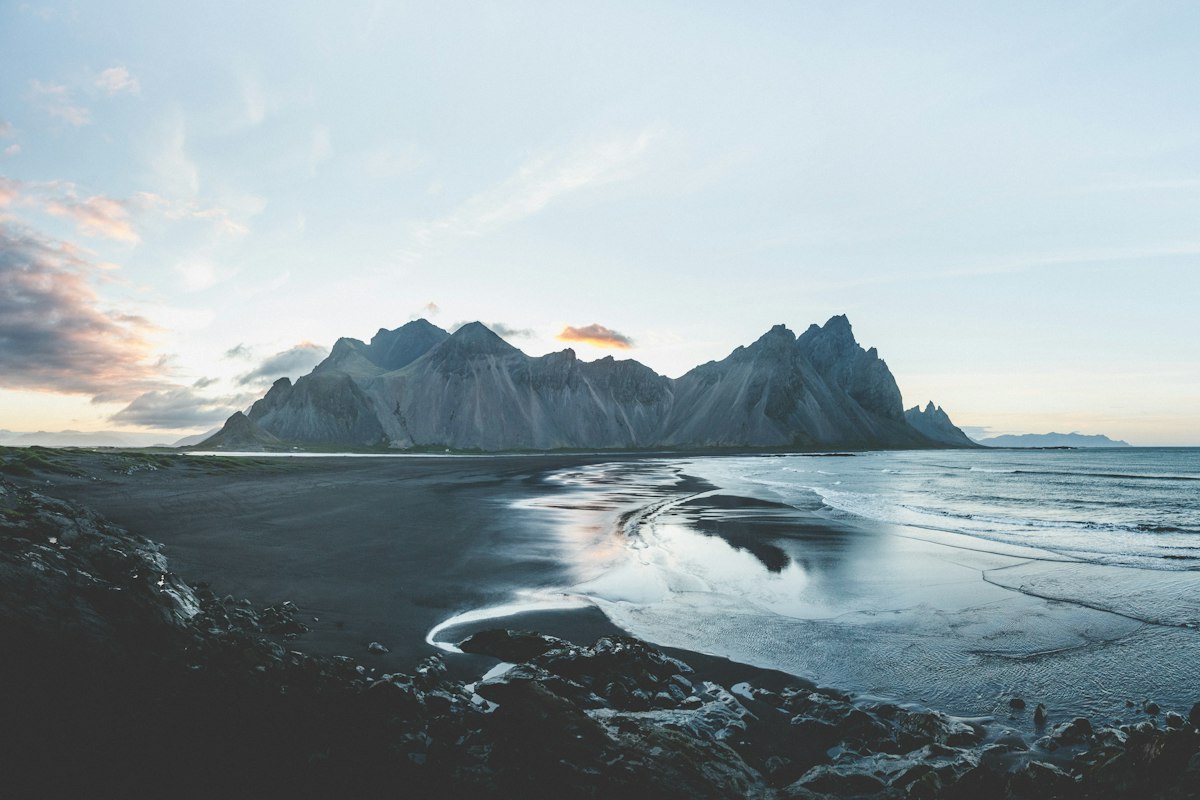
Iceland's landscape resists architecture. The volcanic terrain shifts and steams, glacial rivers carve new channels each spring, and the wind carries a force that has humbled builders for a millennium. Yet it is precisely this hostility that has inspired a remarkable generation of architects to create hotels that do not conquer the landscape but converse with it — structures of concrete, glass, and turf that seem to emerge from the earth itself, as natural as the basalt columns of Reynisfjara.
The Ion Adventure Hotel
Perched on a lava field overlooking Thingvellir National Park, the Ion Adventure Hotel is a study in restrained drama. Its cantilevered Northern Lights Bar extends over the moss-covered lava like the prow of a ship, floor-to-ceiling windows framing the Hengill volcano. The interiors deploy a palette of driftwood gray, volcanic black, and the occasional shock of Icelandic wool in burnt orange. There is no art on the walls — the landscape outside each window is exhibition enough. At night, when the aurora borealis begins its silent performance, guests gather in the geothermal outdoor pool and watch the sky ignite in curtains of green and violet.
"The best Icelandic architecture does not shelter you from the wilderness. It immerses you in it, while keeping you warm."
Deplar Farm and the New Remoteness
In the Troll Peninsula of northern Iceland, the former sheep farm Deplar has been transformed into a destination that redefines luxury through isolation. Accessible only by helicopter or a winding mountain road passable three months of the year, Deplar offers heli-skiing, fly-fishing, and horseback riding across landscapes that have changed little since the sagas were written. The architecture — a series of connected turf-roofed pavilions designed to echo the original farm buildings — demonstrates that the most powerful design statement is sometimes the refusal to make one.
Iceland's design hotels prove that architecture's highest calling is not to impress but to frame. When the subject is a landscape this extraordinary — where tectonic plates drift apart in real time and geysers erupt on schedule — the architect's task is to step aside and let the earth speak. The best of these hotels understand this. They are not destinations in themselves; they are lenses through which we see the world more clearly.