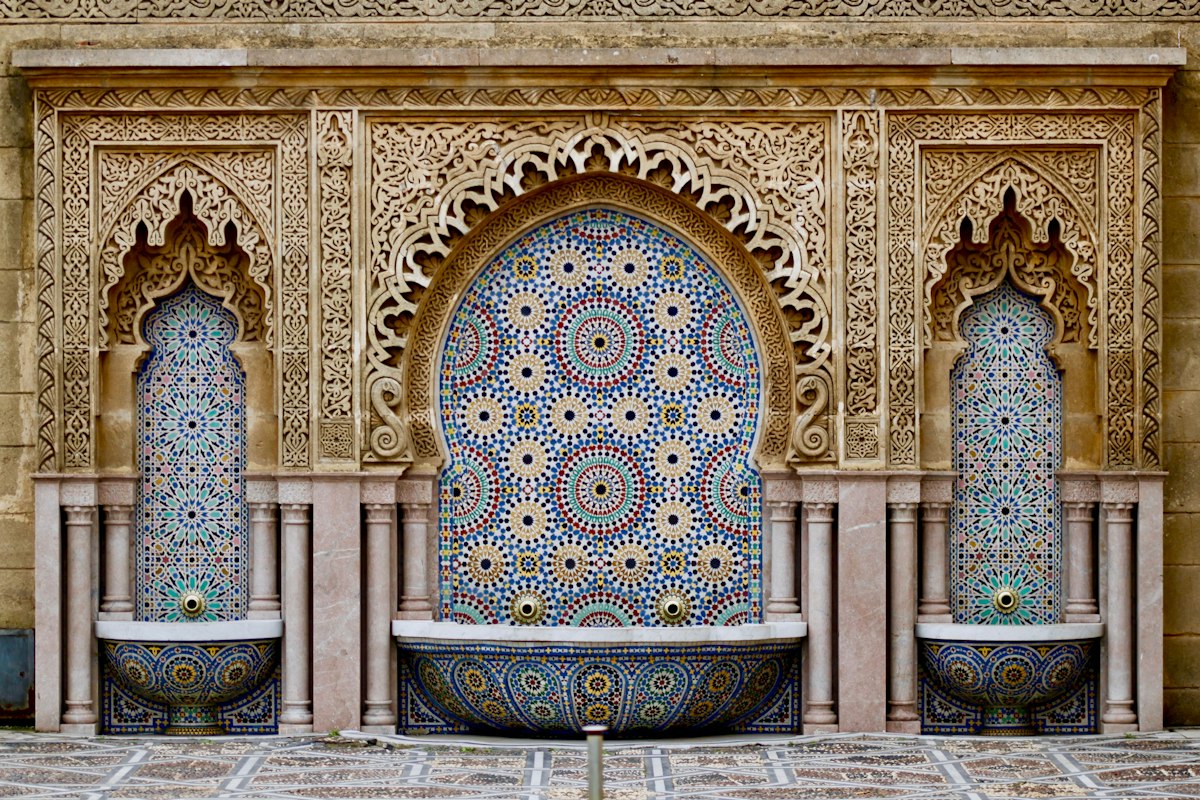
Samarkand announces itself with a shock of blue. The Registan — three madrasahs arranged around a vast public square — confronts the visitor with tilework of such chromatic intensity that the eye struggles to process it. Cobalt, turquoise, lapis, azure: the entire vocabulary of blue deployed across surfaces that shimmer in the Central Asian sun like the interior of a geode. This is architecture as declaration, and what it declares is that the Silk Road's greatest city has not forgotten its magnificence.
The Living Madrasahs
Unlike the preserved-in-amber monuments of Europe, Samarkand's great buildings remain in active dialogue with the present. In the courtyards of the Ulugh Beg Madrasah, artisans practice miniature painting in the same tradition that flourished under the Timurids. At the Shah-i-Zinda necropolis — a corridor of mausoleums so intensely decorated it resembles a street paved in jewels — restoration work continues using techniques unchanged since the fourteenth century. The craftsmen who apply the mosaic tilework are not conservators in the Western sense; they are inheritors of an unbroken lineage.
"To travel the Silk Road today is to understand that the world's greatest cultural exchanges were not digital. They were conducted on horseback, across deserts, by people who believed that beauty was worth dying for."
Bukhara: The Noble City
The road from Samarkand to Bukhara follows the ancient caravan route through the Kyzylkum Desert — four hours of ochre emptiness that makes the arrival in Bukhara feel like surfacing from a dream. The old city is a labyrinth of domed bazaars, turquoise-tiled mosques, and caravanserais converted into boutique hotels where you sleep in rooms once occupied by merchants carrying Chinese silk to Rome. At the Lyabi-Hauz complex, mulberry trees shade a reflecting pool where locals gather for tea and chess, as they have for five hundred years. Time in Bukhara does not pass. It pools.
The Silk Road between Samarkand and Bukhara is not merely a journey through space. It is a journey through the archaeology of human ambition — a reminder that long before the internet connected the world, these cities were already global.